About me
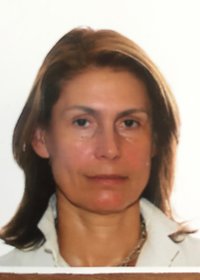
I am a psychologist and offer Jungian psychotherapy. I am in training with the Independent Group of Analytical Psychologists (IGAP) in London. I am a UKCP trainee member and also a member of the C. G. Jung Club London.
My professional path started in science after I obtained a Masters Degree in Mathematics from Sofia University in Bulgaria. For some time, I taught at school and university levels. Later I moved to Belgium where I worked in international project management. In 2011 I obtained BS (honours) in Psychology from the Open University in London. It was the discovery of Jungian analysis that finally opened new, meaningful dimensions in my life.
I speak English, French and Bulgarian and can work in these languages.
“Your visions will become clear only when you can look into your own heart. Who looks outside, dreams; who looks inside, awakes.”
― C.G. Jung (for more information about C.G. Jung click here)
À propos de moi
Je suis psychologue et je propose une psychothérapie jungienne. Je suis en formation au sein du Groupe indépendant de psychologues analytiques (IGAP) à Londres. Je suis membre stagiaire du UKCP et également membre du C. G. Jung Club London.
Mon parcours professionnel a commencé dans les sciences après avoir obtenu une maîtrise en mathématiques à l'université de Sofia en Bulgarie. Pendant un certain temps, j'ai enseigné à l'école et à l'université. Plus tard, j'ai déménagé en Belgique où j'ai travaillé dans la gestion de projets internationaux. En 2011, j'ai obtenu un BS (avec mention) en psychologie à l'Open University de Londres. C'est la découverte de l'analyse jungienne qui a finalement ouvert de nouvelles dimensions significatives dans ma vie.
Je parle l'anglais, le français et le bulgare et je peux travailler dans ces langues.
"Vos visions ne deviendront claires que lorsque vous pourrez regarder dans votre propre cœur. Qui regarde dehors, rêve ; qui regarde dedans, s'éveille".
- C.G. Jung (pour plus d'informations sur C.G. Jung click here)